
Reusable Medical Device Processing for Safety
Streamline your reusable medical device processing with expert decontamination and cleaning to ensure patient safety and compliance.
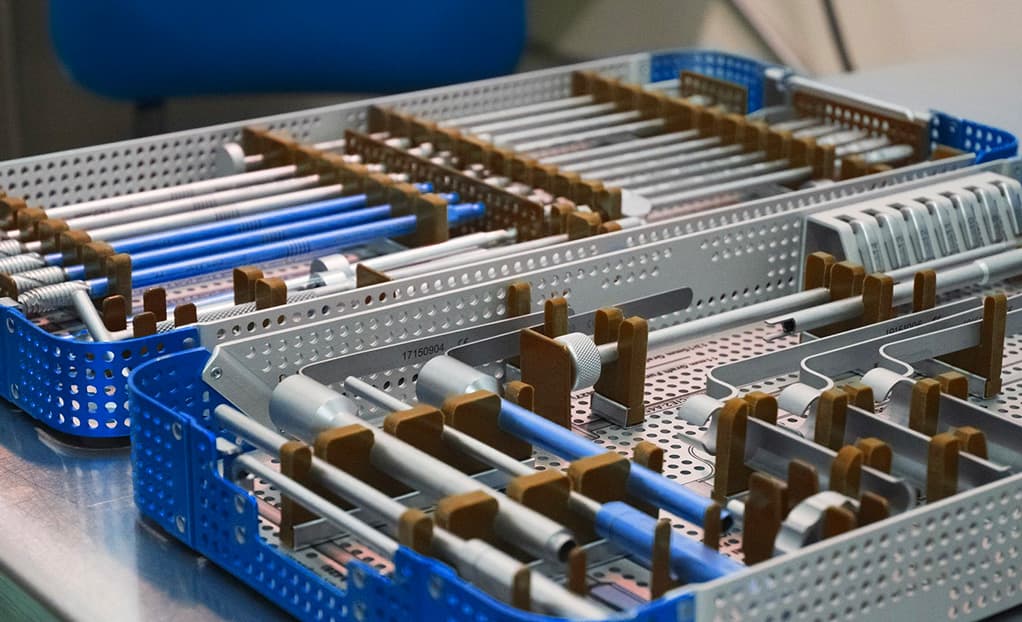
Life Science Outsourcing has proven expertise in helping medical device manufacturers navigate the decontamination process, enhance efficiencies, and meet all regulatory requirements.
Reliable Reusable Medical Device Processing Solutions
Streamline your reusable medical device processing with expert cleaning, decontamination, and sterilization. Ensure compliance with regulatory standards, reduce downtime, and maximize the value of your inventory. Safeguard patient safety while improving efficiency and responsiveness to your team’s needs.
What is reusable medical device processing?
Reusable medical devices must be cleaned, disinfected, and sterilized following strict industry guidelines to ensure they are safe for reuse. These processes remove contaminants, eliminate pathogens, and meet regulatory requirements for medical device reprocessing.
Who uses reusable medical device processing?
Reusable medical device processing ensures orthopedic devices, surgical instruments, and delivery systems are properly decontaminated for safe reuse. This process removes pathogens, prevents infections, and meets strict regulatory standards.
Companies looking to validate single-use devices for reuse can benefit from expert decontamination services that ensure compliance, safety, and efficiency. By partnering with an experienced provider, organizations can extend product life, reduce waste, and optimize inventory management while maintaining regulatory compliance.
Orthopedic decontamination
Hospitals and medical sales teams often face challenges with excess inventory of orthopedic devices. Without proper decontamination, returned products can’t be safely redeployed, leading to unnecessary waste and higher costs.
Life Science Outsourcing streamlines this process with comprehensive decontamination, inspection, and repackaging services. Our autoclave sterilization and quality-controlled methods ensure compliance, safety, and fast turnaround times.
By partnering with LSO, companies can reduce waste, cut costs, and efficiently manage returned inventory while maintaining compliance and quality.
How does reusable medical device processing work?
Reusable medical devices undergo a structured decontamination process in three key steps, each increasing in intensity based on contamination levels.
Level 1: Cleaning
The first and most crucial step in decontamination, cleaning removes both visible and non-visible contaminants (e.g., blood, protein substances, and debris) from the device surface using detergent and water. LSO typically uses Ecozyme for cleaning.
Level 2: Disinfecting
Liquid disinfectants eliminate non-spore-forming bacteria. Common disinfectants include:
- Sodium hypochlorite (bleach)
- Ethyl alcohol
- Isopropyl alcohol (70%)
- Alconox
- Liquinox
- Cidex (glutaraldehyde)
Level 3: Sterilization
This final step destroys microorganisms and eliminates transmissible agents like spores and bacteria. Life Science Outsourcing offers sterilization methods such as:
- Gamma or E-Beam irradiation
- Ethylene oxide (EtO)
- Steam sterilization
What standards apply?
Sterilization standards
In addition to ISO 13485 (Quality Management System Guidelines), LSO adheres to other relevant sterilization standards including:
- OSHA Regulations (1910.1030) – Employee Safety & Exposure Control Plan
- ISO 17665 – Moist Heat/Steam Sterilization
- ISO 11137 – Radiation/Gamma Ray Sterilization
- ISO 11135 – Ethylene Oxide Sterilization
Sterility Assurance Level (SAL)
Sterility assurance level is defined as “the probability of a single unit being non-sterile after it has been subjected to the sterilization process.”
Once a device has been sterilized, tests are conducted to determine if the desired sterility levels have been obtained. LSO tests for this using both biological indicator (BI) testing and chemical indicators.
Packaging and transportation guidelines
It is critical that prescribed guidelines are followed when packaging and transporting contaminated medical devices due to the biohazardous risk involved. Logistics companies and transportation organizations insist that packaging of diagnostic specimens and environmental test samples includes four basic components:
- Watertight primary receptacles
- Watertight secondary receptacles
- Absorbent material
- Sturdy outer packaging
Why LSO?
Life Science Outsourcing has proven expertise in helping medical device manufacturers navigate the decontamination process, enhance efficiencies, and meet all regulatory requirements.
Life Science Outsourcing is one of the few regulated services companies to offer EtO.
Full EtO Validation
Comprehensive packages for regulatory compliance.
Flexible Sterilization Cycles
From fractional to full cycles with EtO residual testing.
Robust Qualification
Secure with 2X qualification.
Choice of PCDs
Tailored to your sterilization needs.
FDA-Registered
Manufacturing Facility
ISO 13485
Certified Quality System
12 Cleanrooms
Class 5–8
125,000+ Sq Ft
Regulated Manufacturing
3 Facilities
CA | NH | Costa Rica