
Packaging validation that passes audits the first time
ISO 11607-compliant packaging from protocol design through production release
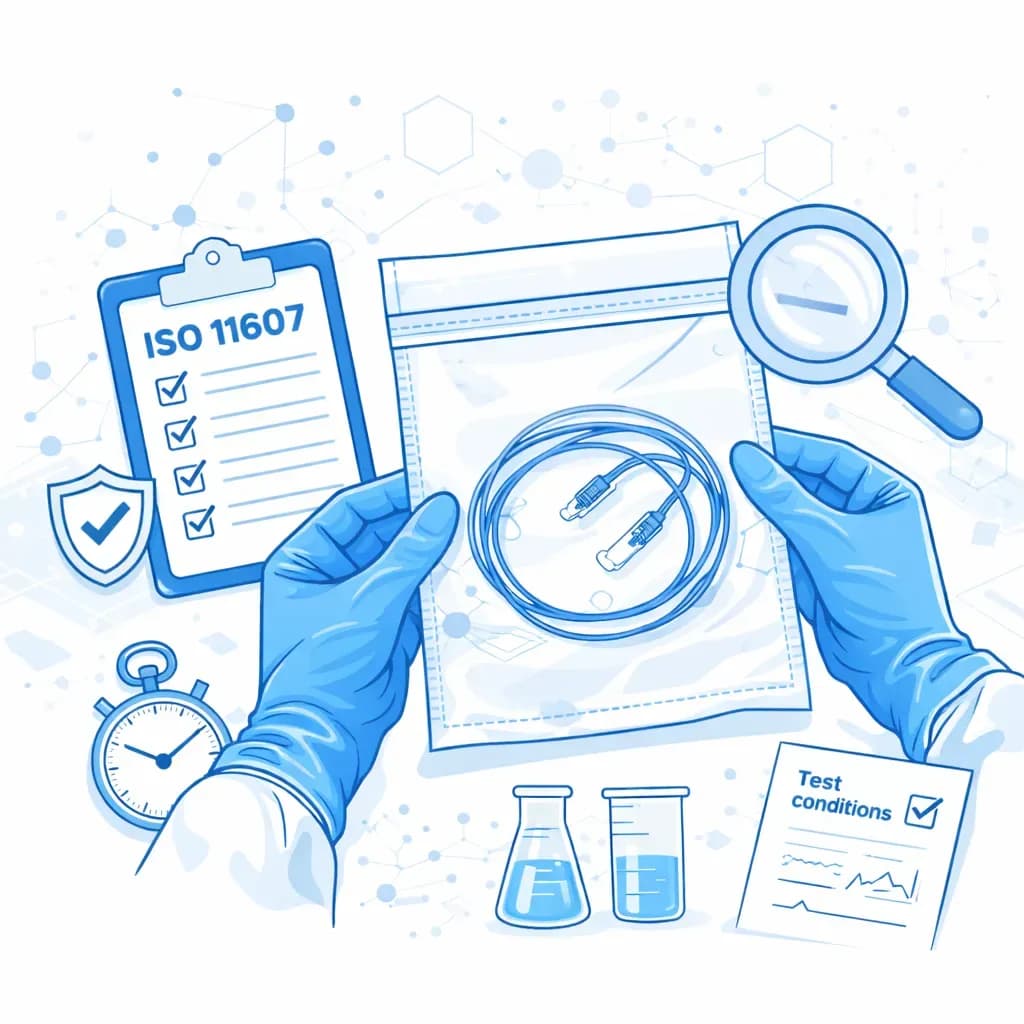
Medical device packaging failures are expensive and avoidable — yet they remain one of the most common sources of regulatory delays. Seal failures, aging test surprises, and incomplete protocols push back launches and trigger re-validation cycles that consume months. Most companies don't discover their packaging gaps until an auditor does.
Full-Scope Packaging Validation
Pre-Validated Packaging Systems
LSO's pre-validated pouch and tray systems can eliminate 8–12 weeks from your validation timeline. Start production faster with a packaging system that's already been through seal testing, aging, and distribution simulation — with audit-ready documentation included.
Protocol Design & Review
Custom test protocols aligned to ISO 11607, ASTM, and ISTA — designed by packaging engineers who've validated thousands of sterile barrier systems.
Seal Strength & Integrity Testing
Comprehensive peel, burst, and dye penetration testing with calibrated equipment and ISO 17025-aligned procedures.
Accelerated & Real-Time Aging
ASTM F1980 accelerated aging and real-time shelf life studies with full environmental chamber control and documentation.
Distribution Simulation
ASTM D4169 and ISTA transit testing that validates your packaging survives real-world shipping conditions — not just lab conditions.
Thousands of sterile barrier systems validated. ISO 11607, ASTM F1980, ASTM D4169, ISTA — we know what auditors look for because we've seen what fails.
From Protocol to Production Release
Protocol Review
Review your device, packaging system, and sterilization method. Identify the right test matrix. 1 week.
Sample Preparation
Prepare test samples, set up aging chambers, and calibrate test equipment. 1–2 weeks.
Testing Execution
Seal strength, integrity, aging, and distribution testing per protocol. 4–12 weeks depending on scope.
Report & Documentation
Complete test reports with raw data, statistical analysis, and audit-ready summary. 1–2 weeks.
Submission Support
Guidance on how to present packaging validation data in your regulatory submission.
Does This Sound Familiar?
Get your packaging validation plan reviewed
Tell us about your device, packaging system, and submission timeline. Our packaging engineering team will identify the right tests, scope, and timeline within 48 hours. Best fit for sterile medical devices requiring ISO 11607-compliant validation.
What Happens Next
Who
A packaging validation specialist with ISO 11607 expertise
When
Within one business day
About
Your device, packaging system, sterilization method, and submission timeline
Frequently Asked Questions
Timeline depends on scope. A straightforward seal and integrity validation for a single packaging configuration takes 6–8 weeks. If you need accelerated aging (ASTM F1980), add 4–8 weeks for the aging study itself. Distribution simulation (ASTM D4169/ISTA) adds another 2–3 weeks. Our pre-validated packaging systems can eliminate 8–12 weeks by starting with a system that's already been through these tests.
A complete ISO 11607 validation includes three phases: packaging system qualification (material specs, seal parameters), performance testing (seal strength, burst, dye penetration, microbial barrier), and stability testing (accelerated and/or real-time aging). We also include distribution simulation testing per ASTM D4169 or ISTA protocols when required. The deliverable is a complete documentation package with test protocols, raw data, statistical analysis, and a summary report formatted for regulatory submission.
Pre-validated systems are LSO's standard pouch and tray configurations that have already completed seal testing, accelerated aging, and distribution simulation. If your device fits within a pre-validated format, you can skip those tests entirely and go straight to device-specific verification. This typically saves 8–12 weeks compared to validating a custom packaging system from scratch — a significant advantage when your submission timeline is tight.
Absolutely. We validate customer-designed packaging systems as well as our own pre-validated formats. We'll review your packaging design, identify the right test matrix based on your device and sterilization method, and execute the full validation. If we spot potential issues during protocol review — such as seal geometry concerns or material compatibility questions — we'll flag them before testing begins so you don't waste time on a design that won't pass.
Failures during validation aren't uncommon — that's why we test. If a seal strength or integrity test fails, we investigate root cause (seal parameters, material specs, equipment calibration) and recommend corrective action. Depending on the failure, this might mean adjusting seal temperature or dwell time and retesting. We don't start the investigation from scratch — we build on the data we already have. You'll receive a deviation report with root cause analysis and the path forward.
Yes. Our test reports and documentation packages are formatted to meet both FDA 510(k) requirements and EU MDR technical file expectations. We reference the applicable standards (ISO 11607, ASTM F1980, ASTM D4169, ISTA) and include the level of detail that reviewers expect. Many of our customers submit to both regulatory bodies using the same validation package.
If your device has a labeled shelf life or expiration date, you need aging data to support that claim. Accelerated aging per ASTM F1980 lets you generate shelf life data in weeks instead of years — typically a 10:1 acceleration ratio. If you're launching soon and need shelf life claims for your submission, accelerated aging is almost always required. Real-time aging runs concurrently and serves as confirmation over the actual shelf life period.